


 (+91) 80 4566 6666
 (+91) 7022316664
 Emergency: (+91) 80 4566 6616





Posted on : 16/11/2026 Views : 14
Gastritis vs Acidity: What Is the Difference?
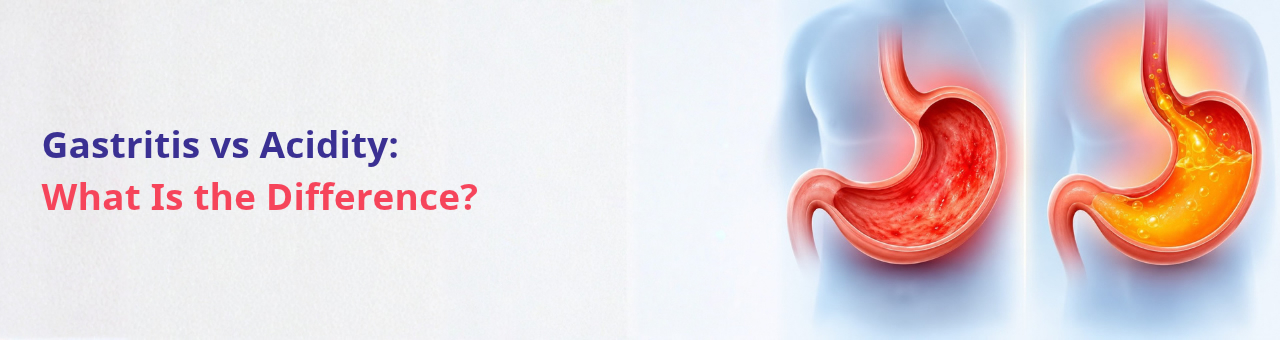
Gastritis and acidity can both cause stomach discomfort, bloating and a burning sensation, but they are not the same. Gastritis is inflammation of the stomach lining, while acidity usually refers to excess acid-related symptoms, including acid reflux and heartburn. Understanding the difference helps you recognise symptoms and seek the right gastritis treatment in Bangalore.
What Is the Difference Between Gastritis and Acidity?
The main difference between gastritis and acidity is what happens inside the digestive system. Gastritis affects the stomach lining, whereas acidity commonly describes symptoms caused by stomach acid irritating the food pipe or digestive tract.
Gastritis is inflammation of the stomach lining. It may develop due to an H. pylori bacterial infection, certain painkillers, alcohol or other causes.
Acidity is a commonly used term for acid-related discomfort. It may include heartburn, acid reflux and a sour taste in the mouth. Acid reflux happens when stomach contents flow back into the food pipe.
The two conditions can sometimes occur together, which is why symptoms alone may not be enough to identify the cause.
Gastritis Symptoms vs Acidity Symptoms: How Can You Tell?
Although some symptoms overlap, their typical patterns can offer clues.
| Symptoms | Gastritis | Acidity or Acid Reflux |
|---|---|---|
| Upper abdominal discomfort | Common | Can occur |
| Burning sensation | May occur in the upper abdomen | Often felt in the chest or throat |
| Bloating | Common | May occur |
| Nausea | Can occur | Sometimes occurs |
| Sour taste in the mouth | Not a defining symptom | Common with reflux |
| Food or acid coming back up | Not typical | Common with reflux |
| Feeling full quickly | Can occur | Less characteristic |
Remember: These symptoms are not a reliable way to diagnose either condition. Persistent upper abdominal pain, heartburn, or indigestion should be assessed by a medical professional.
What Causes Gastritis and Acidity?
Knowing the possible causes can help you understand why symptoms develop.
Common causes of gastritis
Gastritis may be associated with:
- H. pylori infection: This bacterium can cause inflammation in the stomach lining.
- Certain painkillers: Regular use of non-steroidal anti-inflammatory drugs (NSAIDs), such as ibuprofen, can irritate or damage the stomach lining.
- Alcohol: Frequent or heavy alcohol consumption can irritate the stomach.
- Autoimmune conditions: In some people, the immune system attacks cells in the stomach lining.
Common causes and triggers of acidity
Acid reflux and heartburn may be triggered or worsened by:
- Large or late-night meals.
- Lying down soon after eating.
- Spicy, fatty or acidic foods that trigger symptoms.
- Coffee, alcohol or smoking.
- Being overweight.
- Certain medicines.
Not everyone has the same food triggers. Notice which foods or habits worsen your symptoms rather than following an unnecessarily restrictive diet.
Read more- All you should know about gastric cancer.
How Are Gastritis and Acidity Diagnosed?
A doctor will consider your symptoms, medical history, and medicines before recommending tests. The right investigation depends on what they suspect.
Tests may include:
- H. pylori testing: Breath or stool tests may help identify an H. pylori infection
- Blood tests: These may help check for anaemia or other concerns
- Stool tests: These may be used to check for H. pylori or signs of blood in the stool
- Upper GI endoscopy: A thin, flexible tube with a camera is used to examine the food pipe, stomach, and upper part of the small intestine. A small tissue sample may be taken if needed.
An endoscopy is not necessary for everyone with acidity or stomach discomfort. A doctor decides whether it is appropriate based on symptoms and clinical findings.
What Does Acidity and Gastritis Treatment Involve?
Treatment depends on the underlying cause. Medicines that relieve acidity may not be enough to treat every type of gastritis.
Gastritis treatment
Depending on the diagnosis, treatment may involve:
- Antibiotics and acid-reducing medicines when H. pylori infection is confirmed.
- Medicines that reduce stomach acid and allow the lining to heal.
- Reviewing medicines that may irritate the stomach, particularly certain painkillers.
- Avoiding alcohol if it contributes to the problem.
Do not stop prescribed medicines or start antibiotics without medical advice.
Acidity treatment
Acid-related symptoms may be managed through:
- Eating smaller meals.
- Avoiding lying down for three to four hours after eating.
- Identifying and limiting personal food triggers.
- Maintaining a healthy weight where appropriate.
- Using antacids or prescribed acid-reducing medicines when advised.
If heartburn happens frequently or keeps returning, consult a doctor instead of relying on over-the-counter medicines for long periods.
When Should You See a Doctor for Gastritis or Acidity?
Occasional acidity may settle with simple lifestyle changes. However, recurring or persistent symptoms deserve medical attention.
Arrange a medical consultation if you experience:
- Stomach pain or indigestion that lasts more than a week.
- Frequent heartburn or symptoms that keep returning.
- Persistent nausea or vomiting.
- Unexplained weight loss or reduced appetite.
- Feeling full after eating only a small amount.
- Difficulty or pain while swallowing.
Seek urgent medical attention if you vomit blood, notice black tarry stools, or experience sudden severe abdominal pain. Chest pain, especially with pressure, breathlessness or sweating, should also be treated as an emergency rather than assumed to be acidity.
Gastritis & Acidity Treatment at United Hospitals
Frequent acidity, stomach pain, bloating and indigestion can affect your daily routine. These symptoms may sometimes indicate gastritis or other digestive issues. Identifying the underlying cause is important for appropriate treatment.
At United Hospitals, Jayanagar, doctors evaluate digestive concerns based on individual symptoms and medical history.
Don't ignore recurring digestive discomfort. Consult a doctor for proper evaluation and treatment guidance.
📍 United Hospitals, Jayanagar, Bengaluru
📞 080 4566 6666 | +91 70223 16664
Key Takeaways
- Gastritis means inflammation of the stomach lining; acidity commonly refers to acid-related symptoms such as heartburn and reflux.
- Both conditions can cause discomfort, bloating and nausea, so symptoms may overlap.
- H. pylori infection and certain painkillers are recognised causes of gastritis.
- Acidity may improve with suitable meal habits and treatment, while gastritis treatment depends on its cause.
- Persistent symptoms, unexplained weight loss, repeated vomiting or difficulty swallowing need medical assessment.
- Blood in vomit or black, tarry stools require urgent medical attention.
Conclusion
Gastritis and acidity may cause similar digestive discomfort, but they have different causes and may require different treatments. Understanding your symptoms and identifying the underlying cause are important steps towards better digestive health. If you experience recurring heartburn, persistent stomach pain or frequent indigestion, do not ignore the symptoms or rely only on temporary relief.
If you are looking for gastritis treatment in Bangalore, consult a qualified doctor to understand your condition and discuss the right treatment approach. You can also Contact United Hospitals, Jayanagar, to enquire about consultation options and take the next step towards managing your digestive health
Frequently Asked Questions (FAQs)
1. Is gastritis the same as acidity?
No. Gastritis is inflammation of the stomach lining, while acidity is a common term for acid-related symptoms such as heartburn and acid reflux. They can occur together but are different conditions.
2. How can I identify gastritis symptoms?
Gastritis may cause upper abdominal pain or discomfort, nausea, bloating, indigestion and feeling full quickly. Some people with gastritis have no noticeable symptoms.
3. Can acidity turn into gastritis?
Acidity does not automatically turn into gastritis. Acid reflux and gastritis involve different processes, although a person may experience both conditions.
4. What is the best treatment for gastritis?
The best gastritis treatment depends on its cause. A doctor may recommend antibiotics for confirmed H. pylori infection, acid-reducing medicines or changes to medicines that irritate the stomach.
5. Can gastritis be cured permanently?
Many cases of gastritis improve when the underlying cause is treated. However, the outcome depends on the type and cause of inflammation, so follow-up may be needed.
6. Which foods should I avoid if I have gastritis or acidity?
Avoid foods and drinks that clearly worsen your symptoms. Common triggers include alcohol, coffee, spicy foods and fatty meals, but individual responses vary. A balanced diet is generally preferable to unnecessary food restrictions.
7. When should I seek medical help for acidity?
Consult a doctor if heartburn occurs frequently, persists despite lifestyle changes or comes with vomiting, difficulty swallowing or unexplained weight loss. Seek urgent help for blood in vomit, black stools or sudden severe chest or abdominal pain.